
Power BI in 2026: 5 Strategic Shifts That Will Reshape Modern BI
Why now is the time to prepare for the next generation of BI.
Where BI Starts to Break Down
As BI environments mature, complexity increases faster than most teams expect. What often begins as a handful of useful reports gradually turns into a landscape of overlapping datasets, duplicated logic, and unclear ownership.
Reports and datasets are built in isolation, limiting reuse and consistency
Versioning and governance become fragile as more contributors get involved
Manual modeling and measure creation slow down delivery and iteration
Analysts work with partial or ad-hoc pipelines rather than enterprise-ready data products
AI capabilities exist, but are rarely integrated into everyday BI workflows in a meaningful way
These issues are not the result of poor tooling or lack of effort. They are the natural outcome of BI platforms being pushed beyond the scale and operating model they were originally designed for.
Microsoft’s response, as reflected in the 2026 Power BI roadmap, suggests a shift in thinking: from reports to data products, from isolated development to collaborative workflows, and from optional governance to governance by design.
Top 5 Power BI features of 2025
What’s Coming in 2026 and Why It Matters
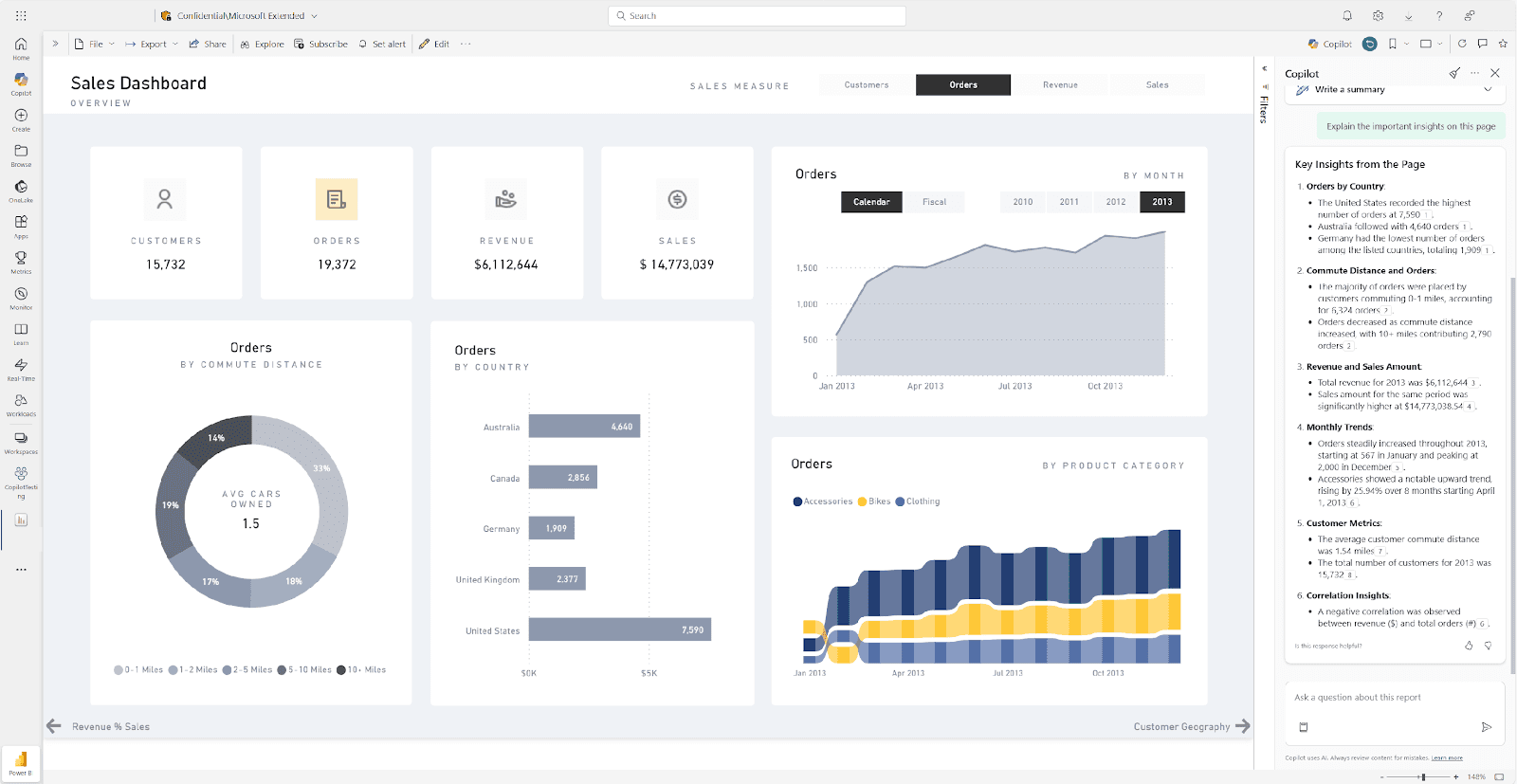
1. Copilot for Everyone
Power BI’s Copilot (AI assistant) is maturing rapidly. By 2026, it will generate report pages, suggest DAX measures and provide contextual summaries, all through natural language. With legacy Q&A set to retire, Copilot becomes the core interaction layer for non-technical users to explore data, accelerating insights while lowering the skill barrier.
Impact: Broader adoption. Faster answers. Smarter use of time.
2. Developer Mode + PBIR Format
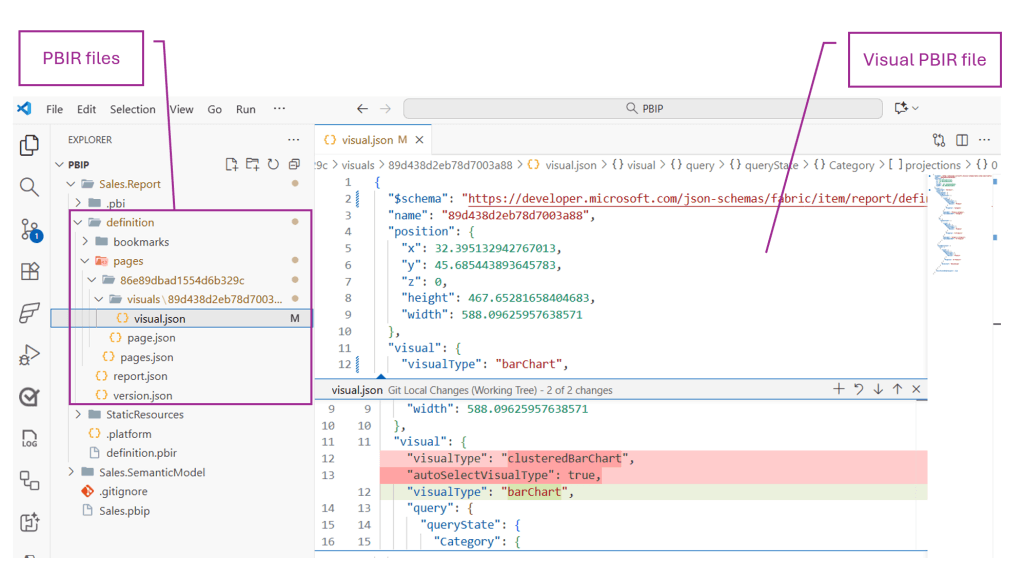
Code-first BI is becoming the standard. The new Power BI Report Format (PBIR) stores reports as structured files and folders readable, versionable, and Git-ready. Combined with Developer Mode in Power BI Desktop, teams can now integrate source control, CI/CD, and collaborative workflows into their BI lifecycle.
Impact: Industrial-grade versioning and teamwork in BI development.
3. Deep Fabric Integration via Dataflows Gen2
In 2026, analysts won’t just build reports; they will publish data products. Power BI will support exporting cleaned data directly into Fabric Lakehouse or Dataflows Gen2. This turns every Power BI semantic model into a reusable, governed component across the data ecosystem.
Impact: Reuse. Governance. Data that travels beyond dashboards.
4. Smarter, Modernized Visuals and Themes
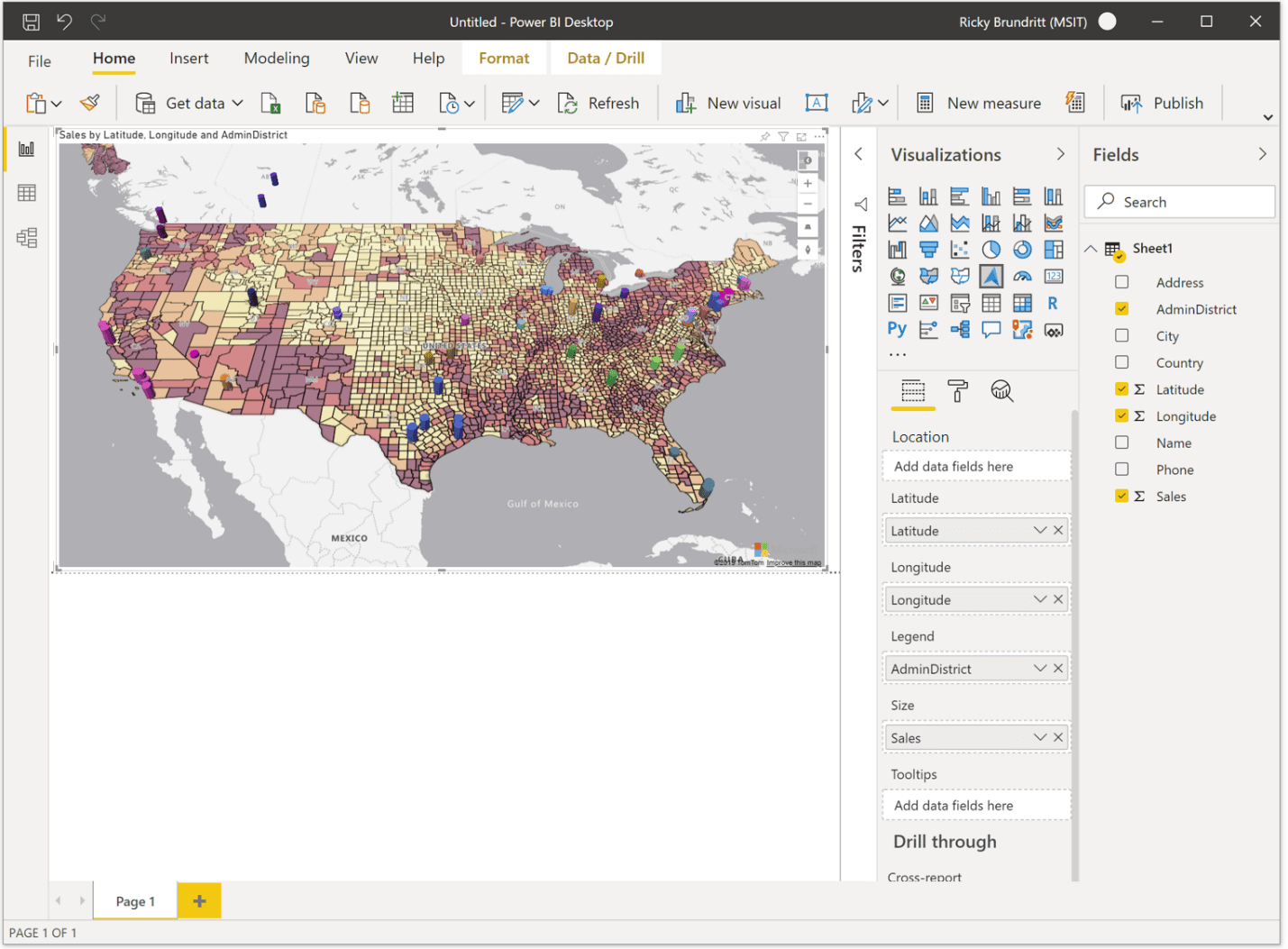
With the GA of visuals like the redesigned Card, better tooltips, and Azure Maps integration, dashboards are becoming sharper and easier to consume.
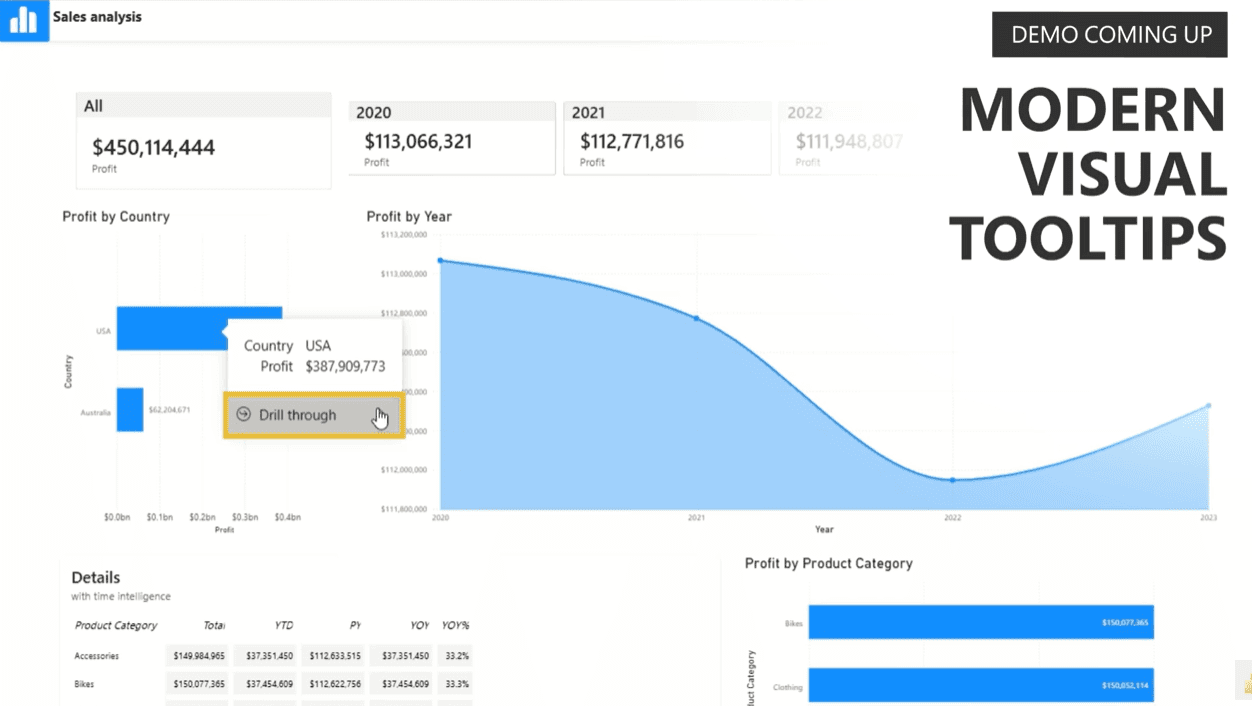
These changes improve executive readability and reduce design effort.
Impact: Less formatting. More storytelling. Better design standards, by default.
5. Governance & Collaboration at Scale
Power BI’s 2026 roadmap strengthens its enterprise backbone. Expect enhancements that make large-scale BI delivery more secure, auditable and collaborative by default:
Fine-grained user access controls to manage who can view, edit, or certify datasets and reports
Dataset ownership mapping to clarify responsibility and prevent orphaned assets
Semantic model versioning and rollback to support experimentation with accountability
Secure, policy-driven dashboard sharing, aligned with Microsoft Purview and compliance frameworks
Deeper Microsoft Teams integration, enabling report discussions, co-authoring, and alerting directly where business happens
These updates position Power BI not just as a reporting tool, but as a fully governed analytics platform for cross-functional teams operating at scale.
It's a shift from isolated content to shared, trusted and governed data products, a critical step for BI leaders who need both control and flexibility.
Why This Isn’t Just Another Roadmap
This isn’t about features it’s about foundations. Microsoft is restructuring Power BI to match the complexity and pace of modern data organizations. If your BI workflows still rely on isolated PBIX files, manual refreshes, or governance workarounds, 2026 is your window to evolve.
At Seven Red Lines, we’re already adapting our delivery frameworks and design standards to align with this future:
Migrating datasets to support Copilot-readiness
Using TMDL and PBIR to version models as code
Shifting from report-building to data product thinking